Polymarket and Kalshi often quote different odds for the same event. Learn why settlement rails, fees, liquidity, participant pools, and regulation create rational, persistent price gaps.
- Sides Team
- /August 04, 2026
- /5 min read
When the same event trades on both Polymarket and Kalshi, the implied probabilities often differ by several percentage points or more. The gaps are typically structural rather than mispricing: settlement rails, fee models, liquidity depth, participant pools, and regulatory constraints each push prices in rational, predictable directions. A price difference alone does not mean one market is wrong; it means the two platforms are pricing under different mechanics.

Why do Polymarket and Kalshi show different odds for the same event?
Odds diverge because each platform runs a separate order book with its own traders, capital, and rules. Polymarket settles on-chain with crypto-native rails; Kalshi operates as a CFTC-regulated exchange with traditional banking. These different cost layers, oracle sources, and onboarding requirements mean identical events can trade at different probabilities. Even when both markets reference the same news source, the speed at which capital can react diverges because of wallet approvals versus ACH transfers. Without a shared clearinghouse or fungible position between the two, there is no mechanical force to enforce parity.
Do Polymarket and Kalshi settle contracts the same way?
No. Kalshi resolves contracts using its own designated criteria and pays out in USD through regulated clearing. Polymarket uses decentralized oracle systems or community-driven resolution, with settlement in USDC on-chain. Resolution timelines, dispute windows, and the risk of delayed outcomes differ, so traders price a slightly different certainty premium into each contract. For example, a contested Polymarket outcome can stall payouts for days while a community vote runs, whereas Kalshi typically follows a fixed regulatory calendar. A contract that looks identical from the headline may carry materially different settlement risk, especially if one platform allows appeals that extend payout dates by days or weeks.
How do fees affect prices on Polymarket vs Kalshi?
Fees change the breakeven price for traders, which shifts where orders cluster. Kalshi charges trading fees on entry and exit; Polymarket includes platform fees plus potential blockchain gas costs. Traders on each side embed these costs into their limit prices, so the midpoint reflects the all-in drag each participant expects to pay. A round trip on both platforms therefore demands a larger edge to turn a profit, which means passive liquidity sits at wider distances from fair value. This means a trader seeking to lock in a price on both venues must overcome two separate cost stacks, not just one.
Does liquidity cause price divergence between prediction markets?
Yes. Thin order books and low market depth mean a single large order can move the quoted price. Polymarket and Kalshi attract different capital pools, so one side may have wider spreads or deeper gaps in the book. Because Polymarket uses an automated market maker and Kalshi uses a traditional order book, the way prices respond to size differs: a large buy on one venue may lift the mid more aggressively than on the other. Traders also face different UI and order-type constraints that affect how fast they can lift offers or hit bids, which keeps headline probabilities from snapping into alignment.
What regulatory and participant differences create persistent price gaps?
Kalshi operates under CFTC oversight with US prediction market regulation that limits certain events and requires identity verification, drawing a user pool heavily weighted toward US residents. Polymarket is globally accessible and offshore, attracting an international, crypto-native participant base. Different demographics bring different information sets, risk appetites, and hedging needs. A domestic policy event may attract more local traders on Kalshi, while a global macro event may draw sharper capital on Polymarket. That geographic split means a geopolitical crisis may trigger heavier repositioning on Polymarket while Kalshi traders barely react, widening the gap. Traders also face different tax and reporting obligations: Kalshi activity may generate straightforward 1099-style documentation, while Polymarket gains require self-tracking of on-chain cost basis. Regulatory constraints prevent each platform from listing some events the other can, meaning even "identical" contracts may carry subtly different legal or jurisdictional risk.
Can you arbitrage price differences between Polymarket and Kalshi?
Visible spreads between the platforms often disappear once you account for fees, slippage, and settlement friction. Cross-platform arbitrage requires matching the exact same event, timing execution across two separate interfaces, and bearing the risk that one side changes its resolution criteria or delays payout. Because capital moves slowly between crypto and fiat rails, the window to capture a gap usually closes before a trader can fund both sides and execute.
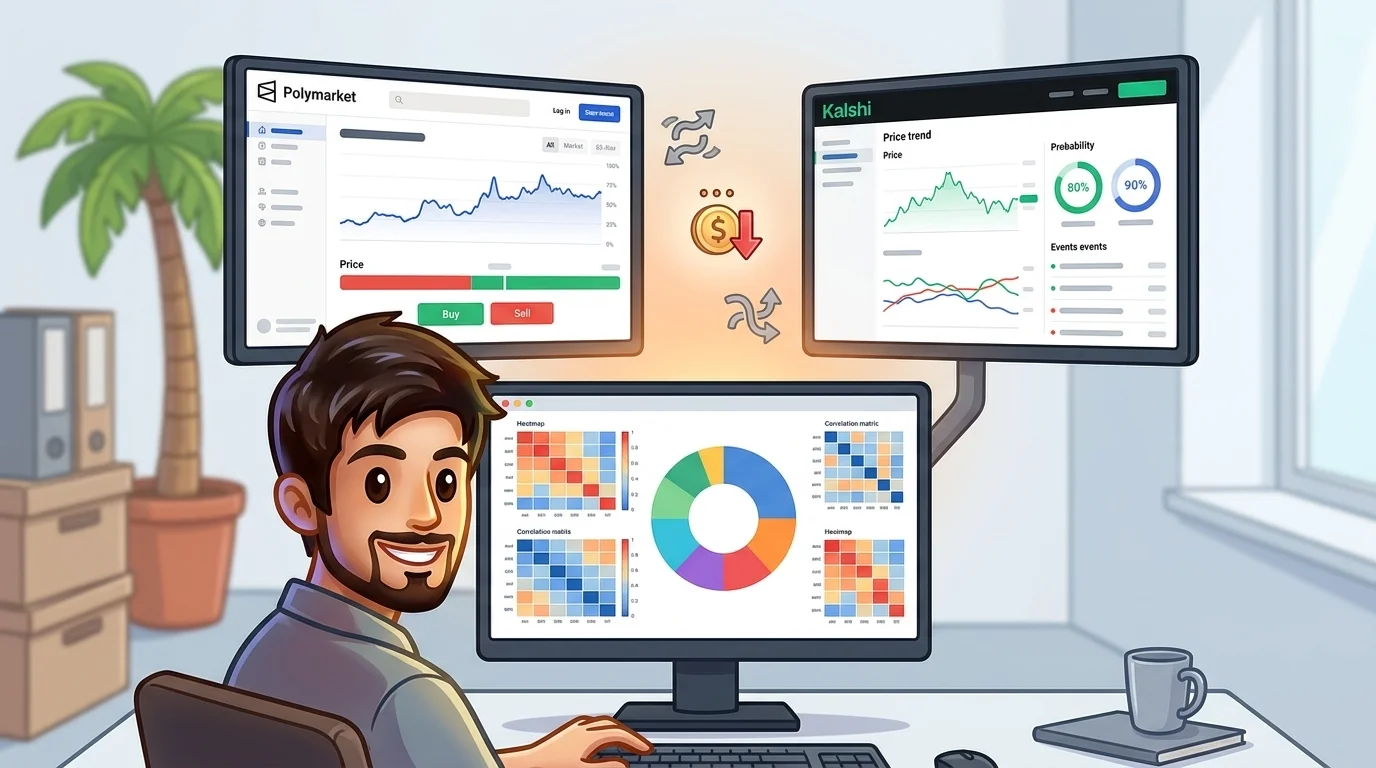
Traders comparing both venues can use Sides.Trade as a unified monitoring layer to separate persistent structural gaps from genuine mispricings.
Are Polymarket prices more accurate than Kalshi?
Neither platform is universally more accurate. Accuracy depends on which participant pool has better information for a specific event. Polymarket's global crypto-native base may price international or token-related events faster; Kalshi's US-focused user base may price domestic policy or regulated sports events more sharply. The structural differences that create price gaps are the same ones that can give each platform an edge in different domains. The Brier score penalizes both over- and under-confidence by measuring how close stated probabilities are to actual outcomes, so a better approach than choosing sides is to compare calibration across a basket of resolved events.
FAQs
They run separate order books with different settlement rails, fees, liquidity, participants, and regulatory rules. Each cost layer shifts the price where buyers and sellers meet.
No. Kalshi settles in USD through regulated clearing with its own resolution criteria. Polymarket settles in USDC on-chain using oracle-based resolution, which can involve different timelines and dispute windows.
Both platforms charge transaction costs, but the models differ. Traders embed expected fees into their limit prices, so the breakeven point—and therefore the quoted midpoint—shifts on each venue.
Yes. Different capital pools create different order book depths. A large trade on the thinner side causes more slippage and wider spreads, keeping headline prices apart even when beliefs align.
Settlement rails, fee models, liquidity depth, participant demographics, and regulatory constraints all play a role. Each factor changes the cost and risk of trading, which is reflected in the quoted price.
Most visible gaps are structural rather than risk-free. After accounting for fees, slippage, settlement delays, and capital transfer friction, the apparent spread usually shrinks or vanishes.
Neither is universally more accurate. Polymarket may price global or crypto events faster, while Kalshi may price US-centric events more sharply because of its participant base.
Each market quotes its own probability because it operates independently. Different information sets, costs, and participant biases mean the same event can map to different implied probabilities across venues.
A lower Polymarket price is usually driven by lower fees, different liquidity, or a participant pool with a different outlook—not by a clear error in Kalshi's pricing.