Learn what a prediction market is, how prediction markets work, how prices reflect probabilities, and how they differ from betting and gambling.
- Sides Team
- /March 30, 2026
- /8 min read
A prediction market is a marketplace where people trade on the outcome of future events. Instead of only sharing opinions, participants take positions on whether something will or will not happen. As those positions are bought and sold, prices move and reflect the market's current view of probability.

Prediction markets can cover elections, sports, crypto, business, finance, and public events. That is why they are often described as forecasting tools, trading environments, and, in some cases, alternatives to traditional betting. The category is broad, but the core idea stays the same: future uncertainty becomes something the market can price.
What is a Prediction Market?
A prediction market is a mechanism for forecasting future outcomes through trading. Participants buy or sell contracts tied to a specific event, such as an election result, a sports outcome, a business milestone, or a price target. If the event resolves in their favor, the contract pays out according to the rules of the market.
You may also see related terms like forecast market, information market, or event market. All of them describe a system where people reveal conviction through market behavior rather than through words alone.
That is what makes prediction markets different from ordinary surveys. A poll asks what people think. A market asks what they are willing to back with money or another form of stake.
Prediction Market in one sentence
A prediction market is a market where future outcomes are priced and traded.
In plain language, it is a place where people put value behind what they think will happen next.
It is called a market because prices are shaped by trading activity instead of being fixed once and for all.
How Prediction Markets work
At a basic level, prediction markets follow a simple flow. A market is created around a future question. Participants choose the outcome they believe in. They buy or sell contracts tied to that result. Prices move as new information enters the market. Once the event happens or the deadline arrives, the market resolves, and winning positions are paid out.
This is the clearest answer to the question, what are prediction markets and how do they work?
Market questions
Every prediction market begins with a clearly defined question. It might be binary, such as “Will candidate X win?” or “Will Bitcoin close above a certain level by a given date?” It can also have multiple outcomes, such as which team will win a tournament or which product will launch first.
Outcomes
The market needs measurable results. Many retail-facing prediction markets use simple Yes/No structures, but other formats can include several choices or more complex result sets.
Shares and prices
Participants buy and sell contracts or shares. The price of a contract usually reflects the market’s current estimate of probability. If a Yes contract trades at 0.70, the market may be implying roughly a 70% chance that the event happens.
Market lifecycle
A prediction market involves more than opening a trade. It passes through creation, active trading, price discovery, closure, and final settlement. During the open phase, users respond to news, data, sentiment, and timing.
Profit logic
Many users participate because they want exposure to price movement. That means prediction markets are not only about forecasting. They are also active trading environments.
Are Prediction Markets accurate?
Prediction markets can be informative, but they are not automatically correct.
Why they can be accurate
They often reward participants for being right rather than merely sounding confident. When money or another form of stake is involved, users have a stronger reason to process information carefully. That can make prices useful as collective forecasts.
Why they can fail
Markets can still be wrong. Low liquidity, emotional behavior, poor question design, manipulation attempts, weak resolution rules, and small participant pools can all distort pricing.
A prediction market is best seen as a signal, not as guaranteed truth.
Practical applications of Prediction Markets
hey
Elections and politics
Political forecasting is one of the most visible use cases. Markets may track elections, appointments, policy outcomes, or debates.
Sports
Sports prediction markets let users take positions on matches, season results, and event milestones.
Crypto and finance
In crypto, these markets may focus on price targets, ETF decisions, governance proposals, protocol launches, or macro events affecting digital assets.
Business forecasting
Organizations can use prediction markets to estimate product success, launch timing, demand shifts, or project completion.
Enterprise decision-making
Teams can compare scenarios, challenge internal assumptions, and surface disagreement earlier.
Market research
A commercial prediction market can be used to measure expected reaction to a launch, pricing move, or policy change.
Commercial platform models
Some prediction markets are public consumer products. Others are enterprise tools, internal forecasting systems, or exchange-style platforms.
Are Prediction Markets commercial products?
Many of them are, but not in exactly the same way.
Some are consumer-facing trading products. Some are research tools. Some are internal business systems. Some are decentralized applications that combine elements of software, finance, and public forecasting.
So yes, prediction markets can be commercial products, but the category includes several different business models.
Types of Prediction Markets
Prediction markets do not all use the same structure.
Continuous double auction
Buyers and sellers place orders, and the market matches them.
Automated market makers
Prices are adjusted algorithmically instead of relying only on user order matching.
Play money markets
Some systems use points instead of real money for education, research, or low-stakes forecasting.
Blockchain-based markets
These rely on wallets, smart contracts, and onchain settlement.
Reputation-based markets
Some systems reward forecasting performance or use reputation as part of participation.
Combinatorial markets
These allow more complex positions that involve multiple related outcomes.
Election markets
A specialized branch focused on political events and public outcomes.
Prediction Markets vs betting and gambling
One of the most common questions is whether prediction markets are the same as betting or gambling.
The honest answer is that they can resemble both, but they are not always identical to either one.
Why Prediction Markets look like betting
Users put money or value on uncertain outcomes. There is a clear win-or-lose element. That is why many newcomers describe them as betting right away.
Why they are not exactly the same
Many prediction markets use dynamic pricing, peer-to-peer exposure, continuous repricing, and early exits. Traditional betting usually relies on fixed odds set by a bookmaker. Prediction markets often function more like markets for information than like a simple house-based wager.
Where the line gets blurry
The distinction becomes less clear in markets focused on sports, entertainment, or highly speculative public events. Product design matters a lot.
Why the difference matters
The answer affects regulation, user expectations, compliance, taxation, and platform structure.
Real-world examples of Prediction Markets
Several well-known examples help make the category more concrete.
Iowa Electronic Markets
A classic example often referenced in academic forecasting.
Polymarket
A widely recognized consumer-facing event market associated with crypto infrastructure.
Kalshi
Frequently mentioned in discussions around regulated event contracts.
Corporate forecasting markets
Businesses have also used internal markets to improve planning around product launches, deadlines, and strategic decisions.
The history of Prediction Markets
The idea behind prediction markets is older than many current platforms. Informal event-based markets existed long before modern digital systems. Over time, researchers and institutions built more structured forms for politics, economics, and public forecasting.
Later, online platforms expanded access. More recently, blockchain technology introduced decentralized versions with smart contracts and onchain settlement. Today, the category includes academic projects, consumer platforms, regulated products, and decentralized applications.
Legality and regulation
Legal treatment is one of the most important practical issues in this space.
Prediction markets may involve real money, public access, tradable contracts, and event-based payouts. That places them close to heavily regulated territory in many jurisdictions.
United States
In the US, treatment may depend on whether the product is viewed as an event contract, a derivatives-style instrument, a gaming product, or another regulated category.
Europe
In Europe, treatment varies by country, licensing regime, and platform design.
Asia and other regions
Some jurisdictions are restrictive, while others allow narrower or more specialized forms. Availability often depends on local rules and compliance strategy.
Why jurisdiction matters
This is why platforms often restrict access by location. A prediction market that is available in one country may be limited or unavailable in another.
Risks, limitations, and controversies
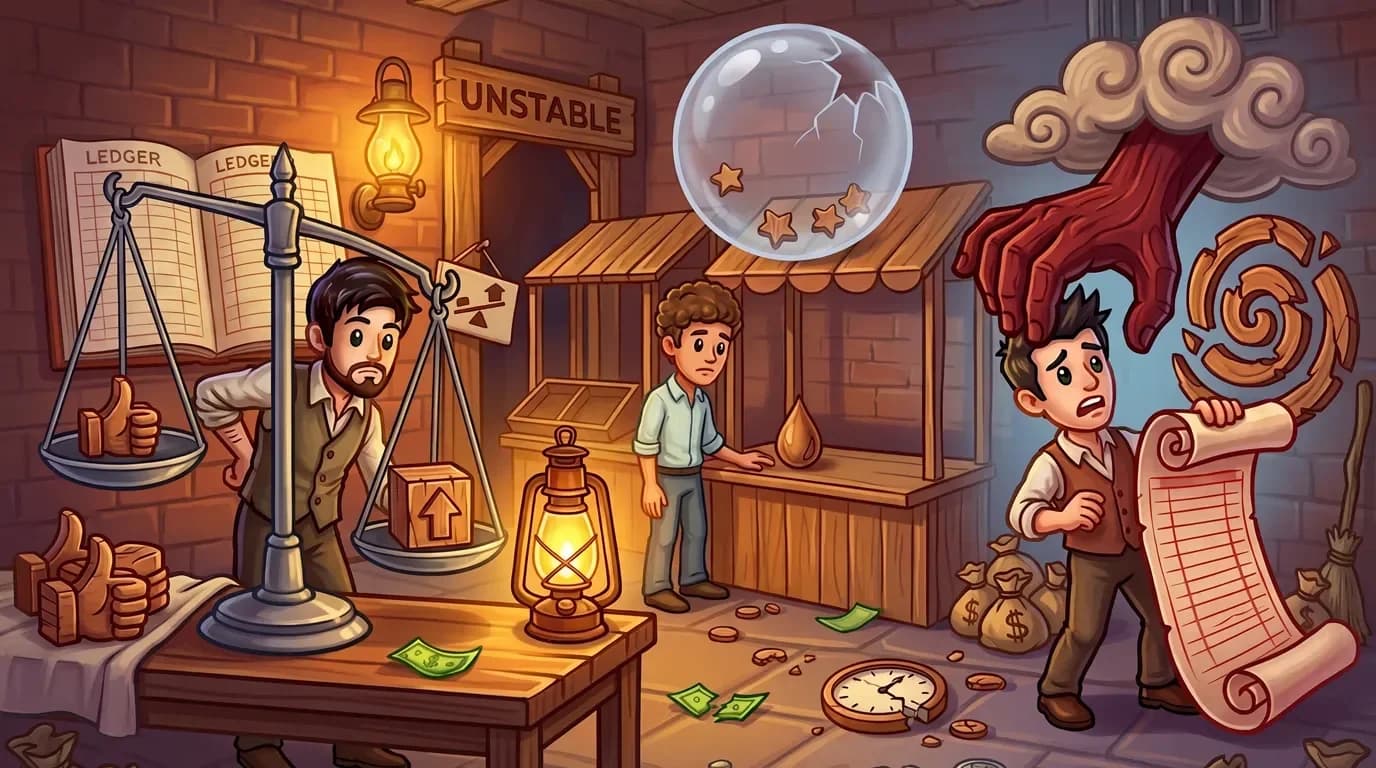
Prediction markets can be informative and useful, but they are not frictionless.
Manipulation
Thin markets can be pushed by large participants or coordinated narratives.
Low liquidity
Without enough activity, the price signal becomes less reliable.
Resolution ambiguity
Poorly written markets can create confusion about what outcome actually counts.
Oracle and settlement risk
In decentralized systems, weak oracle design or a bad dispute process can damage trust in settlement.
Ethical concerns
Some people object to markets built around tragedies, social harms, or controversial events.
Regulatory uncertainty
Platforms operating in unclear legal environments may face access restrictions, enforcement pressure, or sudden product changes.
Common misunderstandings about Prediction Markets
A few misconceptions appear again and again.
Prediction markets are not always the same as gambling. Market price does not equal certainty. Not every platform is decentralized. Not every market is legal in every country. And not every participant waits until the end to realize value.
These misunderstandings matter because many first-time users arrive with questions shaped by betting, trading, or crypto, and the category overlaps with all three without fully matching any one of them.
The bottom line
A prediction market is a market where uncertainty becomes tradable. People use these markets to forecast events, express conviction, react to information, and sometimes profit from being right. Some prediction markets feel closer to trading tools, some resemble betting products, and some are built for business forecasting or research.
The simplest possible definition is this: a structured market for pricing and trading beliefs about the future.
Final thought
Prediction markets turn uncertainty into tradable outcomes. They can help users read collective expectations, react to new information, and take positions on future events. But they are still markets: prices can be wrong, liquidity matters, rules matter, and legal access depends on the platform and jurisdiction.
FAQs
It is a market where people trade on what they think will happen in the future.
They create tradable markets around future events. Users buy or sell exposure, prices move with new information, and the market settles when the result becomes known.
It is a market where future outcomes are priced, traded, and resolved according to predefined rules.
A prediction market involves a defined event, outcomes, tradable contracts, pricing, participants, and a settlement process.
Not exactly. It can look similar, but many prediction markets use dynamic pricing and market-based trading rather than fixed bookmaker odds.
That phrase usually reflects the idea of putting money on uncertain outcomes. Whether it is accurate depends on the platform structure and legal framework.
They can be both. Some are open consumer platforms, while others are internal business tools or research systems.
On many platforms, yes. If the market is still open and there is enough liquidity, users may be able to sell their position before the event resolves. The final result does not always have to be the only way to realize value.
No. Prediction markets can be useful signals, but they are not guaranteed forecasts. Low liquidity, unclear rules, manipulation, emotional trading, or limited participation can all make prices less reliable.